

Unexpected industrial chiller downtime can stop production, increase operating costs and affect product quality. In many factories, chillers play a critical role in keeping equipment and processes at the correct temperature. When a chiller fails, the entire production line may be disrupted.
The good news is that many chiller breakdowns can be prevented with proper maintenance and regular inspections. This guide explains the common causes of chiller downtime and practical ways to keep your cooling system running reliably.
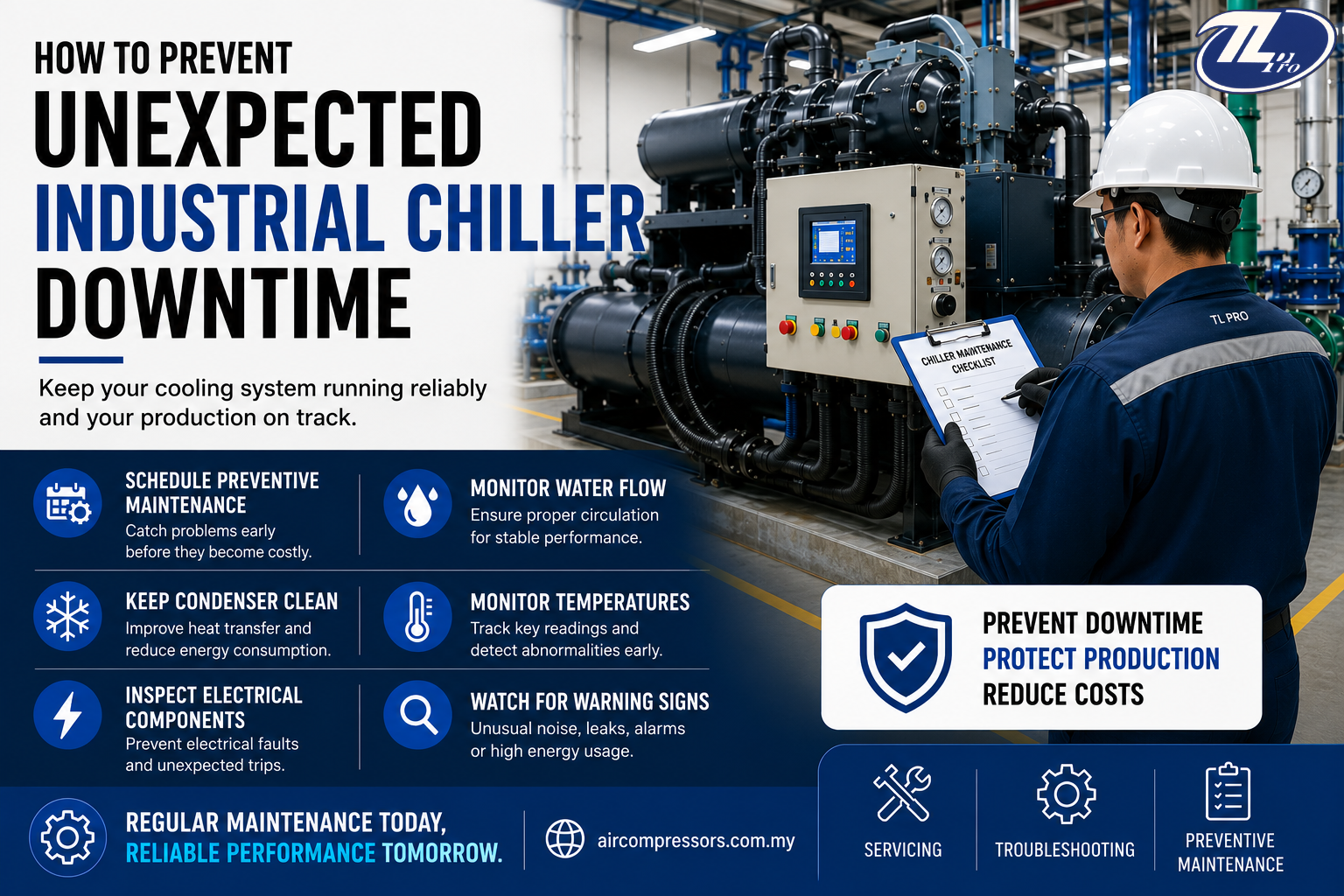
1. Schedule Preventive Maintenance
Preventive maintenance is one of the most effective ways to reduce unexpected breakdowns.
A scheduled maintenance program helps identify worn components before they fail. It also keeps the chiller operating at its designed efficiency.
Typical preventive maintenance includes:
- Checking refrigerant pressure
- Inspecting electrical connections
- Cleaning condenser coils
- Checking pumps and motors
- Testing safety controls
- Verifying operating temperatures
Routine servicing reduces the risk of sudden failures and extends equipment life.
2. Keep the Condenser Clean
A dirty condenser makes it difficult for the chiller to release heat.
When heat cannot be removed efficiently, the compressor works harder. This increases electricity consumption and may eventually cause high-pressure trips.
Regular condenser cleaning helps:
- Improve cooling efficiency
- Reduce energy consumption
- Prevent compressor overload
- Extend equipment lifespan
3. Monitor Water Flow
Poor water circulation is a common cause of chiller problems.
Low water flow may result from:
- Blocked strainers
- Dirty filters
- Pump failure
- Closed valves
- Air trapped inside the piping
Proper water flow ensures stable cooling performance throughout the production process.
4. Inspect Refrigerant Levels
Low refrigerant can reduce cooling capacity and force the compressor to operate longer than necessary.
Common signs include:
- Insufficient cooling
- Longer operating hours
- Higher electricity consumption
- Frequent system alarms
Refrigerant should only be checked by qualified technicians using the correct procedures.
5. Monitor Operating Temperatures
Abnormal operating temperatures often indicate developing problems.
Keep an eye on:
- Chilled water supply temperature
- Chilled water return temperature
- Condenser water temperature
- Compressor discharge temperature
Unexpected changes should be investigated early before they develop into major failures.
6. Check Electrical Components
Electrical problems are another common reason for unexpected downtime.
Regular inspection should include:
- Contactors
- Circuit breakers
- Control panels
- Temperature sensors
- Pressure switches
- Wiring connections
Loose or damaged electrical components can cause nuisance trips and production interruptions.
7. Watch for Early Warning Signs
Many chiller failures provide warning signs before a complete breakdown occurs.
Pay attention if you notice:
- Unusual vibration
- Abnormal noise
- Water leakage
- Oil leakage
- Frequent alarms
- Reduced cooling performance
- Rising energy consumption
Early troubleshooting usually costs much less than emergency repairs.
Why Preventing Chiller Downtime Matters
Unexpected downtime can lead to:
- Production delays
- Product quality issues
- Higher maintenance costs
- Increased electricity consumption
- Emergency repair expenses
- Reduced equipment lifespan
Regular preventive maintenance helps improve system reliability while reducing long-term operating costs.
Conclusion
Industrial chillers are essential for maintaining stable production and protecting valuable equipment. Most unexpected breakdowns can be prevented through routine inspections, preventive maintenance and early fault detection.
If your industrial chiller is showing signs of reduced cooling performance, unusual alarms or increasing energy consumption, it is best to arrange a professional inspection before a minor issue becomes a major repair.
Regular maintenance not only improves reliability but also helps maximise the efficiency and lifespan of your industrial cooling system.